
Last updated:
Long Beach Marine Electric connects sailors with licensed, insured marine electricians who specialize in sailboat electrical systems: mast wiring and deck connectors, masthead and tricolor navigation lights, wind and instrument systems, and the battery, solar and charging setups that keep a sailboat running without an engine on. Sailboats have their own electrical problems, most of them at the mast step and the top of the mast.
What happens on the first visit
- Test of every mast circuit from the panel: tricolor or sidelights and stern, steaming light, anchor light, deck light and instruments.
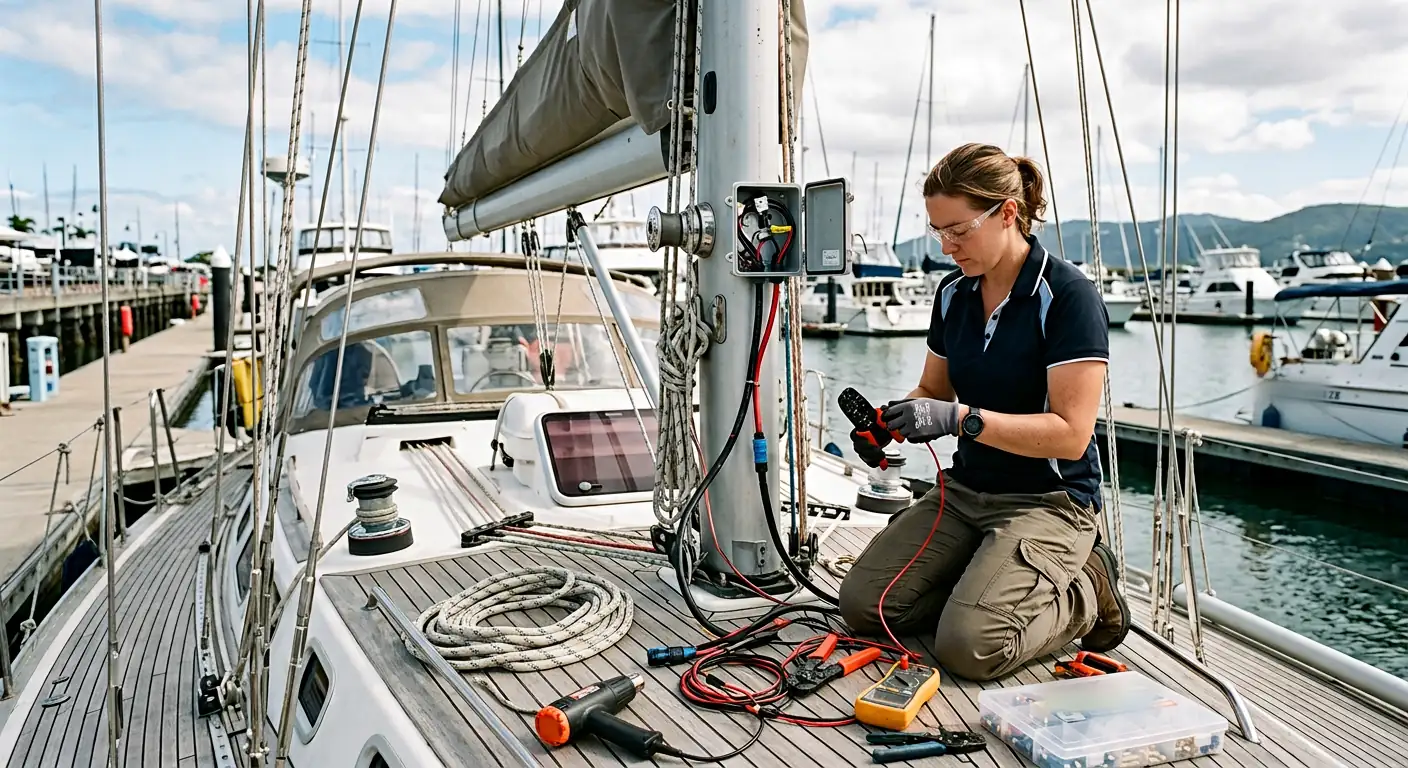
- Inspection of the mast-base connection, the most common failure point, where wiring passes through the deck or along a keel-stepped mast.
- Voltage-drop measurement on the long mast runs, which are the longest circuits on most sailboats.
- Energy audit for cruising: what runs underway and at anchor, and how the batteries are charged without the engine.
- A written plan noting which work needs the mast unstepped and which can be done from a bosun's chair, plus a fixed price.
Sailboat navigation lights
Under COLREGs Rule 25, a sailing vessel under 20 meters may combine its sidelights and stern light in a single tricolor lantern at the masthead, which is visible farther and uses one bulb's worth of power. That light is for sailing only. Under power, a sailboat must show a steaming (masthead) light plus sidelights and stern, not the tricolor. Wiring and switching both correctly, and making sure the anchor light at the masthead works, is one of the most common sailboat electrical jobs. Visibility ranges come from COLREGs Rule 22, the same as powerboats.
Mast wiring and connectors
Mast cables run 30 to 60 feet or more, so they need conductors sized for voltage drop, especially on critical navigation lights. Where the cable leaves the mast, a deck connector or gland is exposed to spray, sun and foot traffic, and it's the single most common failure point. Replacing it with a sealed connector, or re-terminating it with marine-grade connections, fixes most "lights work sometimes" complaints. Re-running cables inside the mast is easiest when the mast is unstepped, which is worth timing with rigging work.
Power for sailors
Sailboats run electronics, autopilot, fridge and lights for long periods without the engine charging. That makes the solar and battery system the heart of a cruising setup. LED navigation and cabin lighting, an efficient autopilot and a lithium house bank are the common upgrades for boats that anchor out around Long Beach and Catalina.
Insurance, warranty and who pays
Sailboat electrical work is owner-paid. Mast-top work that needs a climb or a crane is priced separately, and much of it is best scheduled with a rigging inspection or a haul-out when the mast is down.
What's included
- Tricolor, steaming and anchor light wiring
- Mast-base connector replacement
- Mast cable re-runs
- Wind and instrument installation
- Autopilot power and network
- Solar and battery systems for cruising
- Voltage-drop test of mast circuits
- Mast-up or mast-down scheduling
DIY vs cheap fix vs proper sailboat electrical work
| Factor | DIY | Cheap operator | Proper marine work |
|---|---|---|---|
| Nav lights | Tricolor used under power | One light wired, not switched | Rule 25 lights correctly switched |
| Mast base | Taped splice | Household connector | Sealed marine deck connector |
| Mast cable | Undersized | Reused old cable | Sized for voltage drop on long runs |
| Power | Engine charging only | Small panel | Energy budget, solar and battery sized |
| Result | Lights fail at sea | Intermittent | Tested on every switch |