
Last updated:
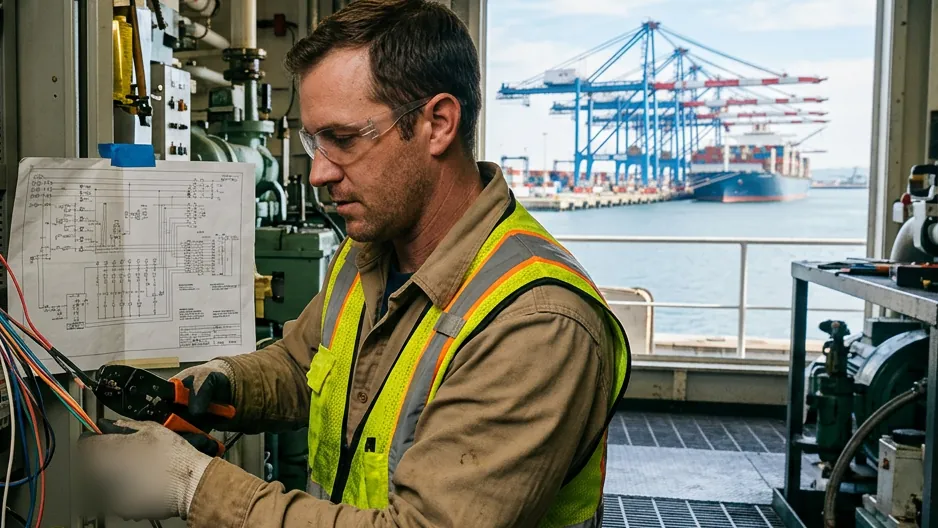
Long Beach Marine Electric connects vessel owners, operators and port engineers with a licensed, insured commercial marine electrician for the boats that work out of Long Beach and the LA Harbor: charter and sportfishing boats, crew and supply boats, harbor and utility vessels, and other work boats. Commercial electrical work is mostly about downtime. A boat that can't sail loses a trip, a charter or a contract, so the job starts with fast fault-finding and ends with written findings you can hand to an inspector, an insurer or the next crew.
What happens on the first visit
- A briefing with the owner, captain or port engineer: the fault, the vessel's schedule, recent work, and any electrical drawings or one-lines on board.
- Fault-finding with a meter, clamp meter and voltage-drop testing on the affected circuits, starting with the systems that keep the boat from sailing.
- A check of charging sources, battery banks, shore power and generator transfer, because most commercial outages trace back to one of them.
- Notes on anything an inspector or surveyor is likely to flag: overcurrent protection, chafe, unsupported runs, non-marine components.
- A written finding and a price, or a time-and-materials plan for complex troubleshooting, before repair work starts.
Commercial vessels in Long Beach and the LA Harbor
Long Beach and the neighboring Port of Los Angeles form one of the busiest port complexes in North America. The Port of Long Beach alone moved about 9 million twenty-foot container units in the first eleven months of 2025. Around that cargo traffic works a fleet of smaller commercial boats: sportfishing and charter boats running out of the landings, crew and supply boats, pilot and harbor vessels, and work boats that support the terminals. Those boats run long hours in salt water and spray, and their electrical systems wear out faster than a weekend boat's.
Inspected vs uninspected vessels
Which rules apply depends on how the vessel is certificated. Small passenger vessels under 100 gross tons that the Coast Guard inspects fall under 46 CFR Subchapter T, and their electrical installation is governed by 46 CFR Part 183, which covers power sources and distribution, lighting, and other electrical systems. Uninspected commercial vessels, such as many six-passenger charter boats, are usually built and maintained to ABYC standards, with E-11 covering AC and DC systems.
On an inspected vessel, electrical changes can affect the vessel's approved plans and its Certificate of Inspection. Check with the cognizant Coast Guard office before modifying an inspected vessel's electrical system, and keep the written findings and invoices from every repair.
The faults that take commercial boats out of service
- Charging failures. An alternator, regulator or battery charger that stops charging drains the house and start banks over a long day.
- Corroded connections. Spray and constant vibration loosen and corrode terminals, bus bars and crimps, causing intermittent faults that come and go with the sea state.
- Overloaded circuits. Electronics, bait-tank pumps, lighting and galley loads added over the years, often on circuits never sized for them.
- Shore power and generator transfer faults. Tripping pedestals, hot inlets, and transfer switches that don't fully isolate sources.
- Chafed wiring. Cables rubbing through where they pass bulkheads and engine rooms, which is a fire risk and a common survey item.
Insurance, warranty and who pays
Commercial work is billed to the vessel owner or operating company. Troubleshooting is usually billed hourly at $140–$200/hr in Long Beach, and defined repairs and projects are priced in writing. Larger jobs can be scheduled in phases around the vessel's trips. Every job ends with written findings for the vessel's records, inspections and insurer.
What's included
- Fault-finding on AC and DC systems
- 12V, 24V and 32V DC systems
- Alternators, regulators and battery chargers
- Battery banks and switching
- Shore power and generator transfer
- Rewiring of chafed or undersized circuits
- Navigation lights and deck lighting
- Written findings for inspections and insurers
Quick fix vs proper commercial vessel electrical work
| Factor | DIY | Cheap operator | Proper marine work |
|---|---|---|---|
| Fault-finding | Swap parts until it works | Replace the obvious part | Meter and voltage-drop testing to the root cause |
| Wiring | Whatever is on hand | Automotive wire | Tinned marine cable, sized for load and run length |
| Protection | Often missing | Fuse sized to the load | Overcurrent protection sized to the wire |
| Chafe and support | Ignored | Tape over the damage | Re-routed, supported and protected through bulkheads |
| Inspections | Flagged | Often flagged | Built to the applicable rules, documented |
| Records | None | Invoice only | Written findings for owners, inspectors and insurers |